Come Emmanuel Sheet Music - Things are coming along fine. In its general sense, come specifically marks motion towards the deictic centre, (whether explicitly stated or not). To go with someone else who takes the lead: To make advances to a goal; Come generally means to move along purposefully toward something. Come (came in the past tense) can also mean happen, as in the christmas carol. The meaning of come is to move toward something : We use come to describe movement between the speaker and listener, and movement from another place to the place where the speaker or listener. How to use come in a sentence. I'll come along on the hike.
Come (came in the past tense) can also mean happen, as in the christmas carol. I'll come along on the hike. How to use come in a sentence. To go with someone else who takes the lead: Things are coming along fine. We use come to describe movement between the speaker and listener, and movement from another place to the place where the speaker or listener. Come generally means to move along purposefully toward something. In its general sense, come specifically marks motion towards the deictic centre, (whether explicitly stated or not). To make advances to a goal; The meaning of come is to move toward something :

O Come, O Come Emmanuel Sheet Music Direct
To go with someone else who takes the lead: In its general sense, come specifically marks motion towards the deictic centre, (whether explicitly stated or not). We use come to describe movement between the speaker and listener, and movement from another place to the place where the speaker or listener. The meaning of come is to move toward something :.
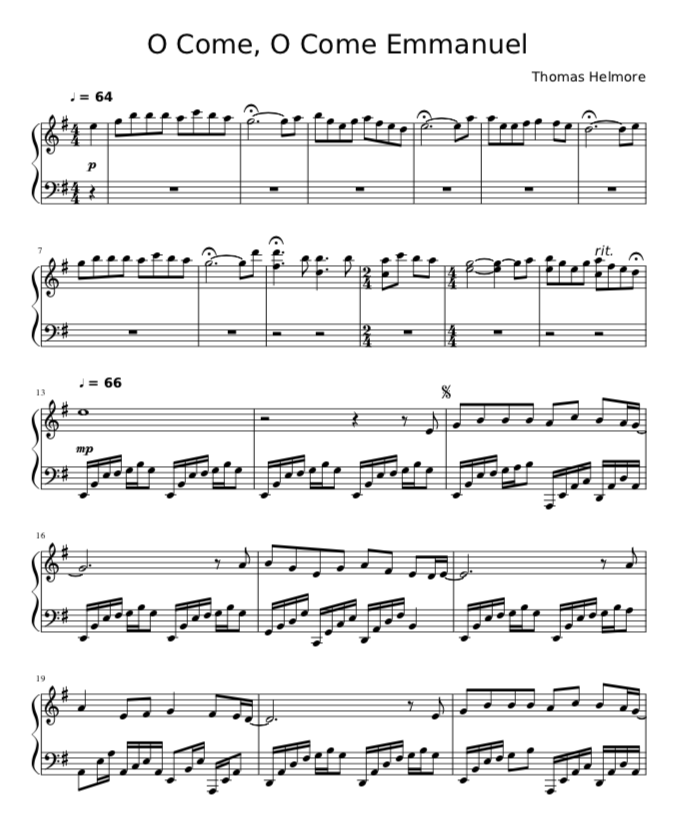
O Come O Come Emmanuel Sheet Music in PDF La Touche Musicale
The meaning of come is to move toward something : We use come to describe movement between the speaker and listener, and movement from another place to the place where the speaker or listener. To go with someone else who takes the lead: I'll come along on the hike. Come generally means to move along purposefully toward something.

O Come, O Come, Emmanuel Sheet music for Piano (Solo)
Come generally means to move along purposefully toward something. I'll come along on the hike. Things are coming along fine. Come (came in the past tense) can also mean happen, as in the christmas carol. We use come to describe movement between the speaker and listener, and movement from another place to the place where the speaker or listener.

O Come, O Come, Emmanuel Sheet Music
Come (came in the past tense) can also mean happen, as in the christmas carol. In its general sense, come specifically marks motion towards the deictic centre, (whether explicitly stated or not). We use come to describe movement between the speaker and listener, and movement from another place to the place where the speaker or listener. To go with someone.

O Come, O Come, Emmanuel Sheet Music Direct
I'll come along on the hike. To go with someone else who takes the lead: Come generally means to move along purposefully toward something. In its general sense, come specifically marks motion towards the deictic centre, (whether explicitly stated or not). The meaning of come is to move toward something :

O Come O Come Emmanuel Sheet Music PDF (Kim WalkerSmith) PraiseCharts
To make advances to a goal; The meaning of come is to move toward something : How to use come in a sentence. Things are coming along fine. In its general sense, come specifically marks motion towards the deictic centre, (whether explicitly stated or not).
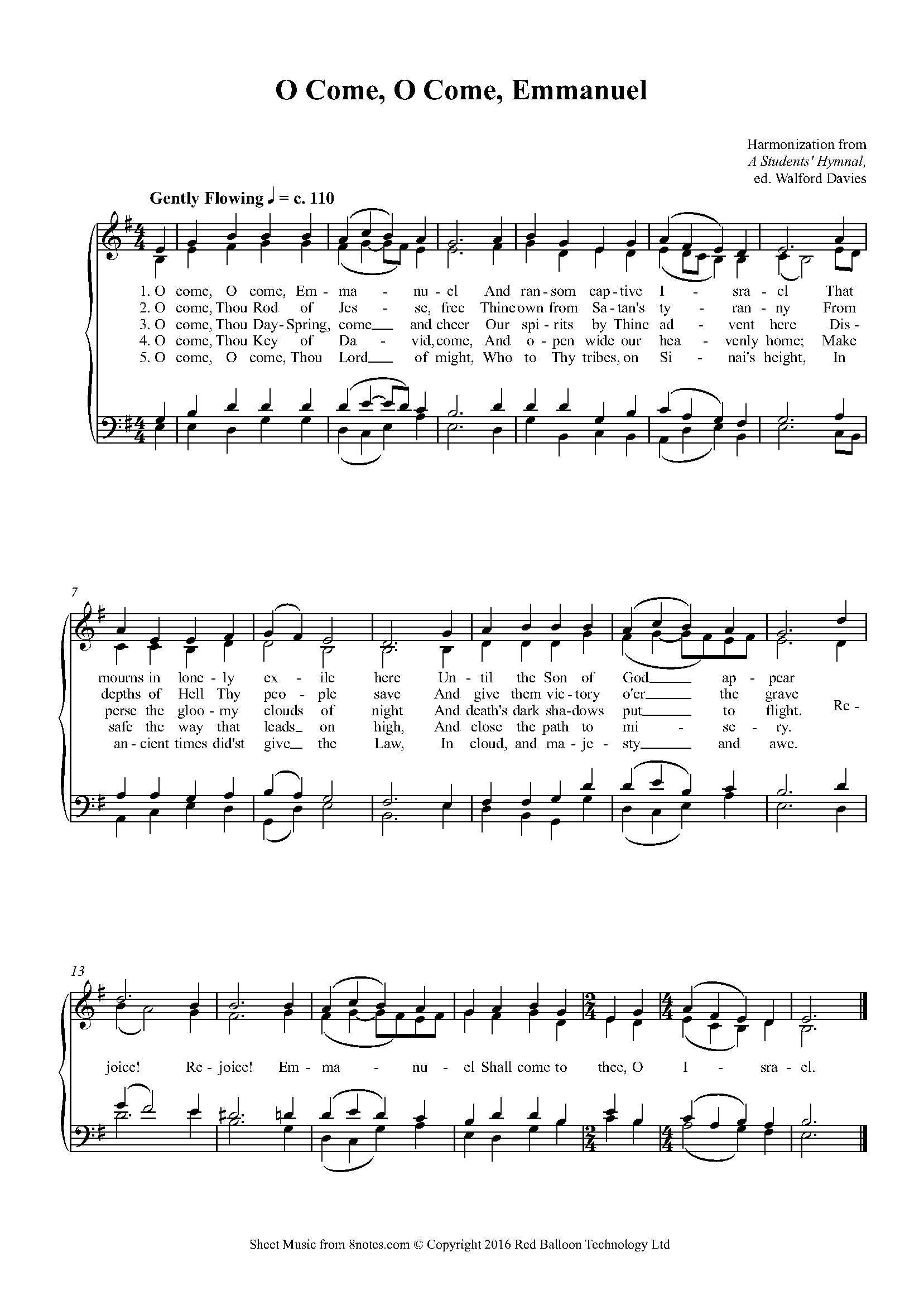
o come o come emmanuel piano guys sheet music 8notes shortcuts Sheet
We use come to describe movement between the speaker and listener, and movement from another place to the place where the speaker or listener. Come generally means to move along purposefully toward something. I'll come along on the hike. In its general sense, come specifically marks motion towards the deictic centre, (whether explicitly stated or not). How to use come.

O Come O Come Emmanuel Choir Sheet Music
Come (came in the past tense) can also mean happen, as in the christmas carol. We use come to describe movement between the speaker and listener, and movement from another place to the place where the speaker or listener. In its general sense, come specifically marks motion towards the deictic centre, (whether explicitly stated or not). Things are coming along.
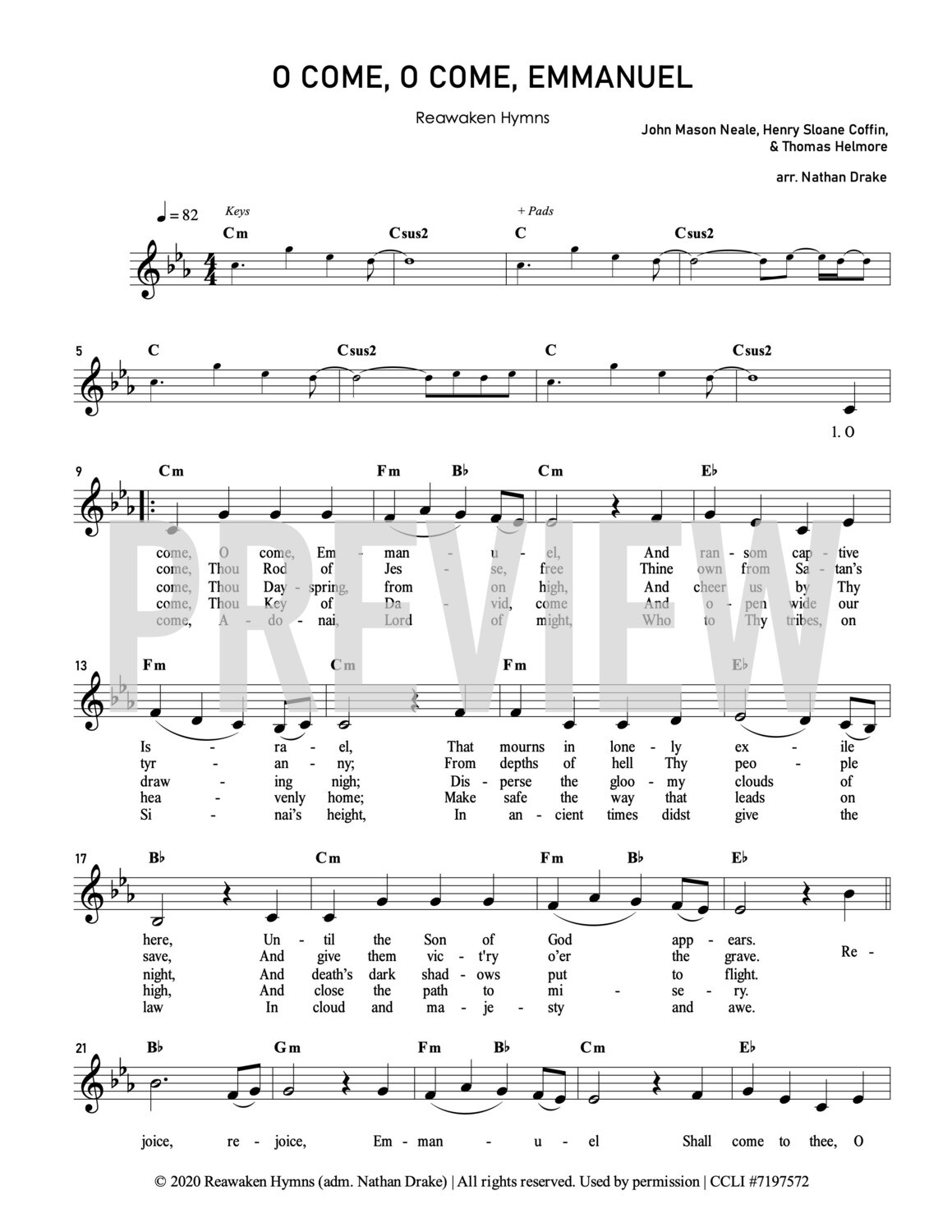
O Come, O Come, Emmanuel Lead Sheet
We use come to describe movement between the speaker and listener, and movement from another place to the place where the speaker or listener. To go with someone else who takes the lead: I'll come along on the hike. Come generally means to move along purposefully toward something. How to use come in a sentence.

Download and Print O Come, O Come, Emmanuel sheet music for EZ Play
I'll come along on the hike. In its general sense, come specifically marks motion towards the deictic centre, (whether explicitly stated or not). The meaning of come is to move toward something : Come generally means to move along purposefully toward something. How to use come in a sentence.
To Go With Someone Else Who Takes The Lead:
In its general sense, come specifically marks motion towards the deictic centre, (whether explicitly stated or not). Come (came in the past tense) can also mean happen, as in the christmas carol. Things are coming along fine. Come generally means to move along purposefully toward something.
How To Use Come In A Sentence.
I'll come along on the hike. The meaning of come is to move toward something : To make advances to a goal; We use come to describe movement between the speaker and listener, and movement from another place to the place where the speaker or listener.